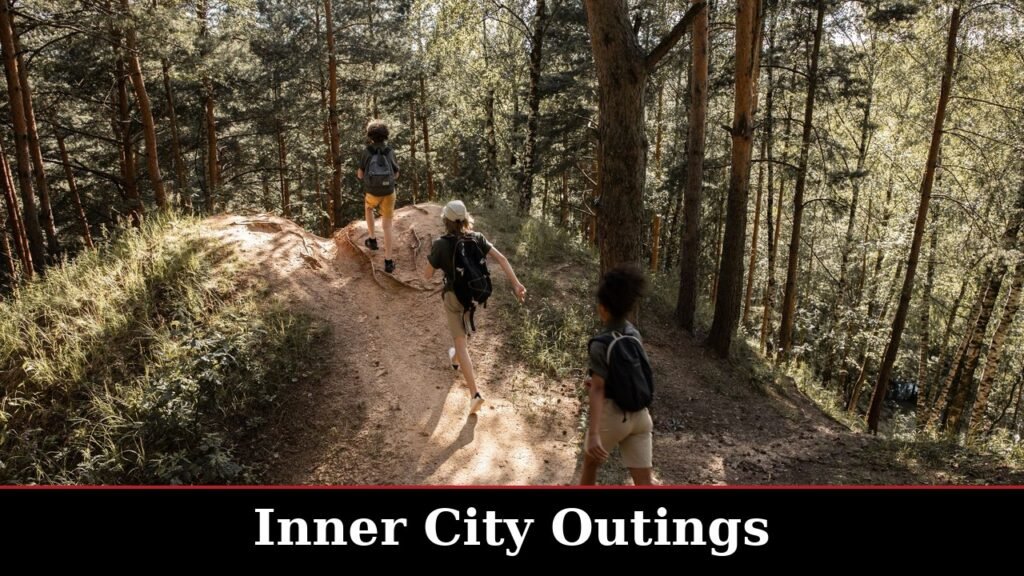
Inner City Outings is the former name of the Sierra Club programme now called Inspiring Connections Outdoors, or ICO. It connects young people and other participants with outdoor experiences they might otherwise struggle to access, using local volunteers and partnerships with schools and community organisations. Activities range from nearby day hikes to camping, paddling and environmental projects.
The programme began in San Francisco in 1971 and developed into a network of local groups. Its name changed in 2014, but the central purpose continued: making time in nature possible for people who face practical barriers to getting outdoors.
Understanding ICO means looking beyond a list of scenic destinations. Transport, equipment, trained leaders, food and relationships with community partners are part of how trips happen. Local groups organise their own programmes, so activities, volunteer routes and participation arrangements should be checked directly with the experienced volunteer group serving the relevant local area.
Contents
Quick Facts
| Former name | Inner City Outings |
|---|---|
| Current name | Inspiring Connections Outdoors |
| Abbreviation | ICO |
| Parent organisation | Sierra Club |
| Origins | San Francisco, 1971 |
| Name change | 2014 |
| Main approach | Volunteer-led outings with community partners |
| Activities | Hiking, camping, paddling, environmental learning and other local outdoor activities |
| Joining a trip | Through the relevant local group and its partner organisations |
What Was Inner City Outings?
Inner City Outings was a Sierra Club community outreach programme built around access to nature. Rather than assuming that living near mountains, a beach or a park automatically meant being able to visit, it brought people, equipment and practical organisation together to make outings possible.
The current Sierra Club Foundation description presents ICO as a national network of volunteer-run groups. It lists hikes, paddling, camping and service projects among the experiences provided without a charge to the young participants.
Local partnerships remain central. A group may work with a school, youth organisation or community agency that already knows the participants, while ICO volunteers contribute outdoor leadership and trip planning.
Why Did the Name Change?
The programme became Inspiring Connections Outdoors in 2014, retaining the familiar ICO initials. A contemporary Sierra Club North Star chapter newsletter explains that the former wording no longer reflected everyone it served.
Participants also came from rural and suburban communities. The newsletter reported concerns that the words inner city could carry negative associations and make engagement harder for participants, volunteers, donors and partners.
The new name shifted attention towards the intended experience: building connections with the outdoors. The older name still appears in historic newsletters and local histories, which is why searches for Inner City Outings continue to lead to today’s ICO groups.
Where the Programme Began
San Francisco Bay ICO traces the idea to 1971, when a small group of Sierra Club outings leaders took urban young people backpacking. Its official history records formal Sierra Club recognition in 1974.
That history describes a programme supported by volunteers who do much more than lead a walk. Recruitment, fundraising, training, equipment maintenance, outreach and financial administration all help keep trips running.
It also describes a gradual approach to leadership, with experienced adults helping participants develop outdoor skills. The roots of the programme were local, even as the wider idea spread through Sierra Club groups elsewhere in the country.
Who Does ICO Serve?
The intended participants are people who have limited opportunities to experience the outdoors. Depending on the local group, this can include children, teenagers, families and adults with disabilities.
Boulder Valley ICO describes providing free nature outings for young people and families in Boulder County and beyond. Its explanation makes a useful point: a community’s overall wealth does not mean that every household has the resources to arrange outdoor recreation.
Angeles ICO’s mission similarly includes underserved young people, disabled people and others who might not otherwise have these experiences. Eligibility and the available programmes are local questions rather than one fixed national age range or application route.
What Happens on an ICO Trip?
The activities depend on the landscape, season, participants and volunteer expertise. A nearby park walk can be a complete outing; an overnight trip may come later as a group builds confidence and experience.
San Francisco Bay ICO’s FAQ describes day hikes, car camping and backpacking across Northern California. It says the activity is adapted to the group’s interests and abilities, with day trips common for younger pupils and backpacking generally more suitable for older teenagers.
The aim is to provide an appropriate experience for the group rather than make every trip physically demanding. Local organisers determine what is feasible and suitable when they plan with the partner agency.
Learning About the Environment
Angeles ICO describes coordinating with teachers so that a walk can reinforce classroom learning. Participants may observe plants, wildlife, habitats, erosion and the relationships between species.
Its mission page also describes creative follow-up, such as writing and drawing about a trip. Outdoor learning is therefore not confined to remembering facts about a trail; a new setting can become the subject of discussion, artwork and reflection after the group returns.
The same page emphasises allowing time for exploration and enjoyment. The programme is intended to introduce nature through direct experience as well as organised instruction.
Examples From Local ICO Groups
Seattle
Seattle Public Schools’ community partner listing describes Seattle ICO working with schools to arrange outings for students who would not otherwise have those opportunities. It dates the local programme’s work to 1991.
The listing includes hikes, snowshoeing, saltwater beaches, camping, cycling and habitat restoration among possible activities. It also describes food, transport, gear and trained leadership as part of the support provided.
Harrisburg
Harrisburg ICO was formed in 1996 by members of the Sierra Club’s Governor Pinchot Group. Its local programme describes hiking on the Appalachian Trail, birdwatching, kayaking on the Susquehanna River, cycling and service projects.
The examples reflect the landscapes available to that community. A national purpose is expressed through practical local outings rather than an identical itinerary in every city.
San Diego and Boulder Valley
San Diego ICO describes supplying supervision, equipment, food and transport, with children joining through partner agencies. Its examples include local natural areas, mountain and desert camping, and some more distant adventures.
Boulder Valley’s programme lists hiking, backpacking, camping, mountain biking, fishing, birding and snowshoeing. Its published examples also include wildlife-camera activities and visits connected with conservation or outdoor service.
How Schools and Community Groups Take Part
Partnerships usually require planning rather than a last-minute booking. San Francisco Bay ICO’s partner guidance begins with an agency application and a conversation about the group’s needs and outing goals.
The group tries to build continuing relationships by matching a partner agency with an ICO leader. An agency coordinator is expected to participate in planning and the outing, bringing knowledge of the young people and their needs.
The guidance describes agreeing the activity, arranging a pre-trip meeting and covering transport, food, equipment and safety. It also sets out the requirement for completed participant forms before an outing begins.
That is one local model, not a universal booking process. A school or organisation should start with the relevant regional group to establish whether it has a suitable programme and volunteer capacity.
How to Volunteer With ICO
Volunteering can involve direct work on trips or support behind the scenes. Las Vegas ICO lists leadership alongside roles in communications, records and website work, illustrating that the programme needs more than experienced hikers.
Its published route for becoming a trip leader includes assisting on outings, first-aid and CPR certification, a background check, an ethics agreement, child-abuse recognition training and outdoor leadership training. Those are that group’s stated requirements, and prospective volunteers should confirm the current process locally.
Angeles ICO’s volunteer page describes orientation, references and a background check for its youth-outing volunteers. It also explains that volunteers can accompany hikes to interact with participants and support the leader.
Applicants should distinguish between helping on an outing and becoming the person responsible for leading it. The San Francisco Bay FAQ describes mentoring and active leadership on trips before certification.
Why Transport, Food and Equipment Matter
San Diego ICO explicitly includes these practical resources in its programme description. Its activities are free for the children, with donations helping fund the outings.
The support addresses the arrangements surrounding a trip as well as the destination itself. A participant does not simply need a route to walk: the group also needs a way to get there, appropriate equipment and adults who can organise the experience.
The Sierra Club Foundation’s national fundraising page describes support for outings in nearby nature and public lands. Local groups can explain what donations or volunteer assistance would be useful for their own programme.
Finding the Right Local Programme
Search using the current name, Inspiring Connections Outdoors, together with the relevant city or region. Look for the local group’s own partner, volunteer or contact information and ask about its present activities.
For families, a school or community agency may be the route into an outing. For volunteers, the first step may be an orientation or application. A page describing past trips does not by itself establish an available place on the next one.
Frequently Asked Questions
Is Inner City Outings still operating?
The programme continues under the name Inspiring Connections Outdoors, with local Sierra Club-affiliated groups.
When did Inner City Outings change its name?
The name changed in 2014.
Are ICO trips free?
National and local programme descriptions commonly state that outings are free for the young participants. Partner arrangements should be confirmed with the local group.
Do volunteers need outdoor experience?
Requirements depend on the role. Local groups provide training and may also need help with non-outing tasks.
Can a parent book any trip directly?
Many programmes work through schools or community partners. Contact the local ICO group to establish its participation process.
Sources
- Sierra Club Foundation programme overview
- San Francisco Bay ICO history
- Contemporary 2014 name-change explanation
- San Francisco Bay ICO FAQ
- San Francisco Bay partner guidance
- Boulder Valley ICO
- Angeles ICO mission
- Seattle Public Schools partner information
- Harrisburg ICO
- San Diego ICO
- Las Vegas volunteer information
- Angeles volunteer information