Haucera can be a confusing word to encounter on a plant list or in a search. If you mean the colourful, low-growing garden plant with rounded leaves and delicate flower stems, the botanical name to look for is Heuchera, commonly called coral bells or alumroot. Kew recognises Heuchera as an accepted genus; “haucera” should not be presented as its official botanical spelling.
There is a real gardening example of the spelling: planting company I Want Plants includes “Haucera” in its species list for a living-wall installation at the Co-op in Steeple Claydon. That is evidence of usage on a commercial planting page, although the list alone does not establish which species or cultivar was installed.
This guide explains the likely gardening interpretation and how to identify and care for heucheras. A separate historical dictionary meaning is covered below for readers who encountered the word in an older text.
Contents
Quick Facts for the Gardening Interpretation
| Accepted botanical genus | Heuchera |
|---|---|
| Common names | Coral bells; alumroot |
| Plant type | Clump-forming perennial |
| Main attraction | Colourful foliage and delicate flowers |
| Typical starting position | Partial shade; check cultivar requirements |
| Soil priority | Good drainage |
| Haucera spelling | Appears on a commercial planting list; not the accepted genus spelling |
| Other context | Historical dictionary cross-reference relating to hawser |
Haucera or Heuchera Which Name Should You Use?
For buying plants, comparing varieties or finding reliable care instructions, use Heuchera or coral bells. Kew places the accepted genus in the saxifrage family, Saxifragaceae, with a native range in North America and the Russian Far East.
A misspelling on a planting schedule does not create a new genus. Equally, it cannot prove the identity of an unlabelled plant. Ask for the full nursery label or cultivar name if you are checking an installation, replacing a plant or matching a particular leaf colour.
What Does the Plant Look Like?
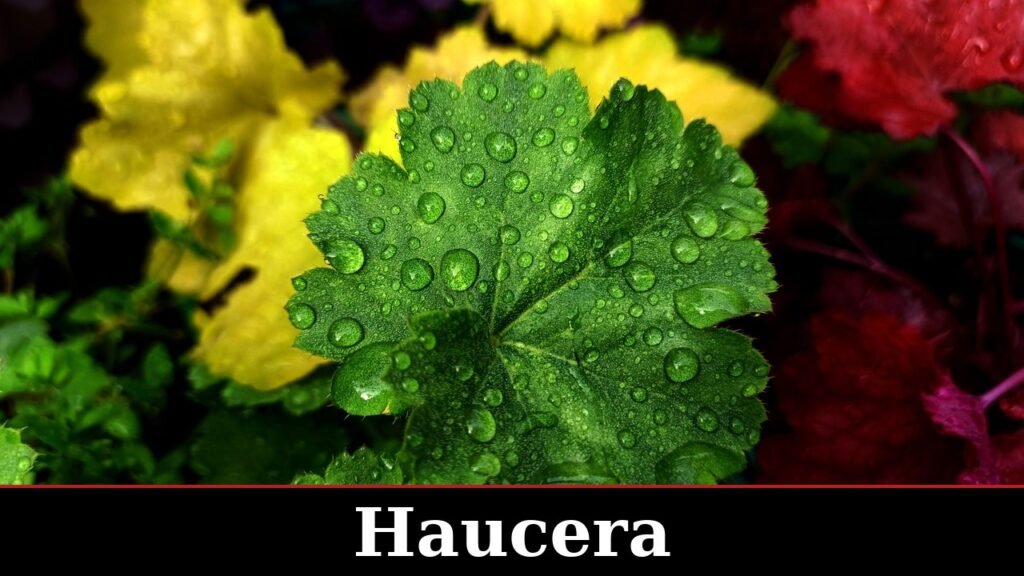
Heucheras form clumps of leaves close to the ground, with slender flowering stems rising above them. North Carolina State Extension describes foliage ranging through purple, orange, brown and yellow. The flowers are generally much smaller than the leaves and may attract pollinators.
The appeal is often the foliage rather than a short flowering display. Leaves can be marbled, strongly veined, ruffled or scalloped. University of Vermont Extension describes a broad range of mature sizes, so a compact pot in a shop does not tell you exactly how much space the established plant will occupy.
To identify a particular plant, compare its label, leaf shape, mature dimensions and flower description. Colour alone is not enough: several cultivars can share a similar shade, and appearance changes through the season.
Choosing the Right Light and Variety
Partial shade is a useful starting point, but the right position depends on the cultivar and climate. Clemson Extension recommends morning sun with afternoon shade for Southern US gardens. A plant tolerating a sunnier British border may react differently to intense summer heat elsewhere.
Clemson also notes that hybrids with Heuchera villosa in their parentage can offer better heat tolerance. It identifies ‘Caramel’ and ‘Citronelle’ as examples. ‘Caramel’ has apricot-toned foliage, while ‘Citronelle’ brings lime-green colour to a planting.
‘Palace Purple’ is another established selection, valued for dark foliage. Missouri Botanical Garden records its recognition as the 1991 Perennial Plant of the Year. These names are useful search terms when you want a specific appearance; none should be assumed from the word haucera alone.
Planting and Watering Heucheras
RHS guidance favours spring or autumn planting, when conditions help new roots establish. Choose soil that drains freely and avoid burying the crown, the central point from which leaves emerge. Position it at the previous growing level or slightly higher.
Water after planting and keep checking moisture during establishment. Established border plants generally need extra water during prolonged dry weather, while containers dry more quickly. Wet compost is not the same as reliable moisture: a pot should drain rather than leave the roots standing in water.
If the ground remains waterlogged, a suitable container or raised bed may be more practical than repeatedly replacing plants in the same spot. Check drainage before choosing a new watering schedule.
Growing in Pots and Planning a Display
Heucheras work in borders, edging and containers. Their foliage makes them useful where a planting needs colour between the flowering periods of neighbouring plants. UVM suggests companions including hostas and ferns for compatible shaded settings.
A group of one cultivar produces a different effect from several contrasting colours. Choose the effect first, then check that all the plants suit the same light and moisture conditions. A visually appealing combination still needs compatible growing requirements.
Container plants have a smaller root environment than those in the ground. Dallas County Master Gardeners recommends moderate feeding for container-grown coral bells, following the product label. It describes them as light feeders and warns against frequent heavy applications of quick-release fertiliser. Avoid treating extra fertiliser as a substitute for suitable light, drainage and watering.
Winter Care and Dividing Older Plants
Whether foliage stays attractive through winter depends on the variety and conditions. Some heucheras are evergreen, while others lose more leaves in cold weather. A few damaged leaves do not automatically mean the whole plant has died.
UVM explains that shallow roots can be lifted by freezing and thawing. Check the plant in spring and reset it if necessary once the soil can be worked. Mulching around the plant can help, but avoid covering its central crown with wet material.
Older clumps can become less vigorous. Dividing an established plant every three or four years is one way to renew it. Keep rooted sections with healthy growth and give the replanted divisions attention while they settle in. Local conditions and the plant’s state matter more than following a calendar date regardless of weather.
Brown Leaves Wilting and Other Problems
Leaf scorch can occur in excessive sun during hot, dry conditions. North Carolina State Extension also lists possible problems including rust, powdery mildew and weevils. Similar-looking symptoms can have different causes, so wilting alone is not a diagnosis.
Start by checking the growing conditions: is the root area dry, saturated or poorly rooted? Has the plant recently moved into stronger sun? Are there visible insects or damaged roots? Those observations are more useful than immediately adding fertiliser or applying a treatment without identifying the problem.
Remove obviously damaged foliage where appropriate and seek local horticultural help for persistent decline. Care advice should match the cultivar and site, particularly when moving between cool, wet gardens and hot, humid climates.
The Separate Historical Meaning of Haucera
The word is not confined to modern plant searches. The Anglo-Norman Dictionary’s entry for haucer, meaning a hawser or heavy rope, cross-references the Dictionary of Medieval Latin from British Sources entry haucera. Logeion also indexes that headword.
If you found haucera in a medieval inventory, shipping document or dictionary, the rope-related context may be the relevant one. That historical vocabulary should not be used as an explanation of the plant’s botanical name. The surrounding sentence determines which question needs answering.
Frequently Asked Questions
Is haucera the correct plant name?
The accepted genus name is Heuchera. In a garden context, haucera may be a spelling confusion, so check the label.
Are coral bells and heuchera the same?
Coral bells is a common name used for plants in the genus Heuchera.
Can I grow heucheras in full sun?
Some varieties tolerate more sun than others. Match the named cultivar to your local conditions rather than assuming every plant has the same tolerance.
Do heucheras grow in containers?
Yes. Provide suitable drainage and monitor moisture more closely than for established border plants.
Should I cut every leaf off in winter?
No blanket cutback is needed. Remove damaged material appropriately and consider the cultivar’s winter habit.
What does haucera mean in an old document?
Historical dictionary references connect it with hawser, a heavy rope. The surrounding text is essential.
Sources
- Kew — accepted Heuchera genus
- I Want Plants — Steeple Claydon planting list
- RHS — growing guide
- NC State Extension — plant profile
- Clemson Extension — light and cultivars
- University of Vermont — landscape and seasonal care
- Dallas County Master Gardeners — care guidance
- Missouri Botanical Garden — Palace Purple
- Anglo-Norman Dictionary — haucer and DMLBS cross-reference
- Logeion — haucera headword